Easy Vegetable Rice Pilaf (Turmeric Basmati, Freezer
Our Secret Hack -Always Rinse Your Rice
Never skip rinsing your Basmati rice! Place your rice in a bowl and cover it with cold water. Swirl the grains gently with your hand until the water turns cloudy from the excess starch. Drain the grains in a fine-mesh strainer. Repeat the process about 2 to 3 more times or until the water runs clear. Alternatively, you can run cold water over the rice, until it runs clear, 1–2 minutes. This removes excess surface starches that cause rice to become gummy and sticky, and to clump together.
Why Is My Rice Mushy?
If you end up with mushy rice, it’s usually because of too much liquid, not cooking it long enough, or not rinsing the rice. Stick to the ratios and timing in this recipe for rice to broth. Don’t forget to rinse the rice before you start cooking. Remember, every stove is different, so use the recipe as a guideline in regards to timing. When you get close to the end of the cooking time for the rice, quickly remove the lid, and take a fork or utensil and push the rice to the side. If you don’t see any liquid, you should turn off the stove and let the rice continue to steam for the remaining 10 minutes.
Avoid Trapping Steam in the Trays
Allow the rice pilaf to cool down closer to room temperature before popping the lid on your Souper Cubes trays and before placing them in the freezer. If you place a lid over piping hot rice, it creates excessive condensation (steam), which ultimately leads to freezer burn and extra moisture during reheating.
How to Store & Freeze Easy Vegetable Rice Pilaf
Can You Freeze Cooked Rice in Souper Cubes Trays?
Yes! Scoop the cooked (and slightly cooled) rice evenly into the wells of your Souper Cubes trays. We recommend two, Souper Cubes 1-cup trays for this recipe. Press down gently with the back of a spoon to ensure there are no large air pockets and so the rice will freeze well together. Secure the labeled lid and place flat in the freezer for a few hours or overnight, until frozen solid.
How to Store Vegetable Rice Pilaf in Souper Cubes Trays
You can store your pilaf in the trays themselves, but this will tie up your trays for other recipes. Instead, once the cubes are frozen solid, remove them from the freezer and let the tray sit on the counter for 5 minutes. For shorter-term storage, transfer them into freezer-safe bags, and for longer-term storage, transfer them to heavy-duty vacuum-seal bags. If stored properly in vacuum-sealed bags, these rice cubes will stay fresh in the freezer for about 3 months.
How Long Does Rice Last in the Refrigerator?
If you plan to eat the pilaf throughout the week, you can store the rice pilaf safely in the refrigerator for up to 4 days.
How to Reheat Easy Vegetable Rice Pilaf
How to Reheat Easy Vegetable Rice Pilaf in the Microwave
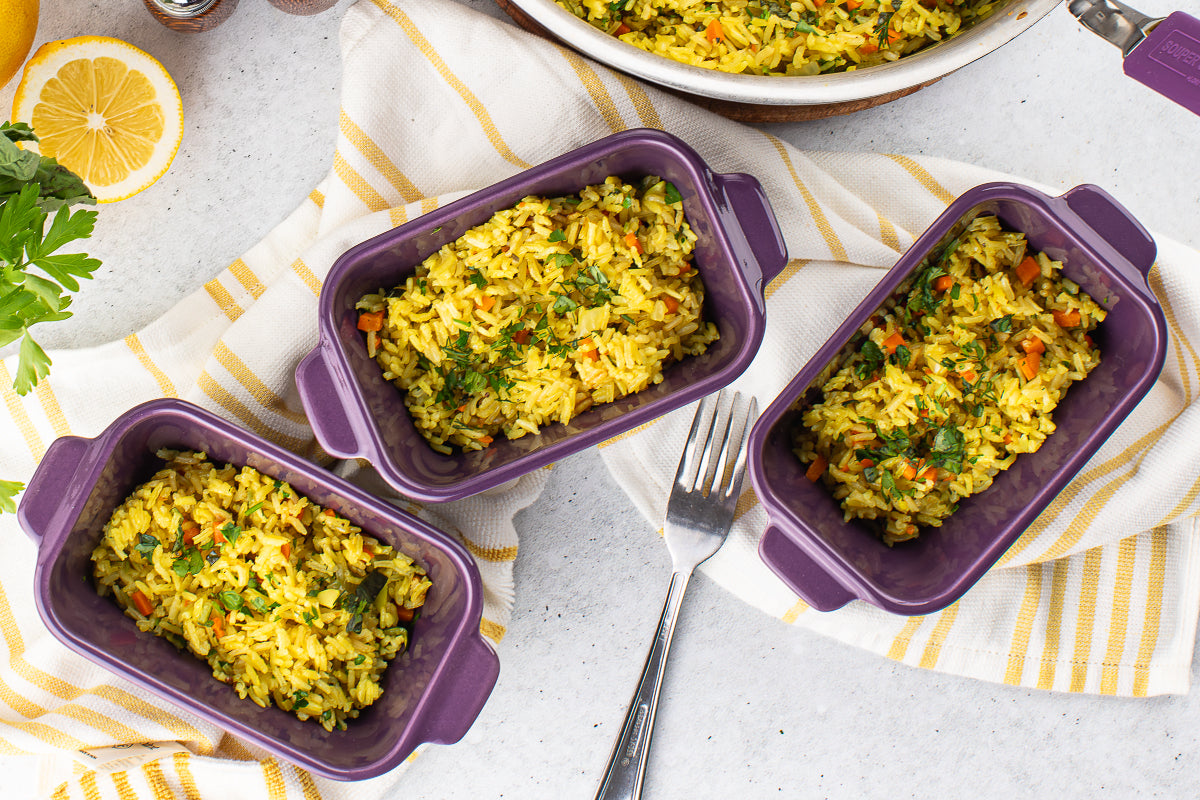
From Thawed - Place your thawed rice cube into a microwave-safe container or a Souper Cubes 5-inch ceramic baking dish. Cover with silicone lid, slightly ajar and microwave on HIGH for 2 minutes or until hot throughout. From Frozen - Place the frozen 1-cup rice cube directly into your Souper Cubes 5-inch rectangular baking dish. Cover with a microwave-safe plate or silicone lid (slightly off), and microwave at 50% power for 2 minutes to break up the frost. Stir gently, add a splash of water, then microwave on HIGH for 1 to 2 minutes until steaming hot.
How to Reheat Easy Vegetable Rice Pilaf on the Stovetop
Place the frozen or thawed rice cube directly into a small sauce pot over medium-low heat. Add 1 to 2 tablespoons of water or extra broth directly to the pot. Cover with a tight lid. The liquid will heat up and create an enclosed steam chamber, beautifully rehydrating the grains. Heat for 5–7 minutes, stirring occasionally to break up the cube, until heated through.
FAQ (Frequently Asked Questions)
What is the difference between rice pilaf and regular rice?
Pilaf is a technique or method where you first toast the rice in a fat before adding the aromatics and liquids, like onions and broth. Plain rice is simply boiled or steamed. The rice in pilaf is toasted so the grains remain separate and it provides some flavor.