Honey Butter Parker House Rolls (Make
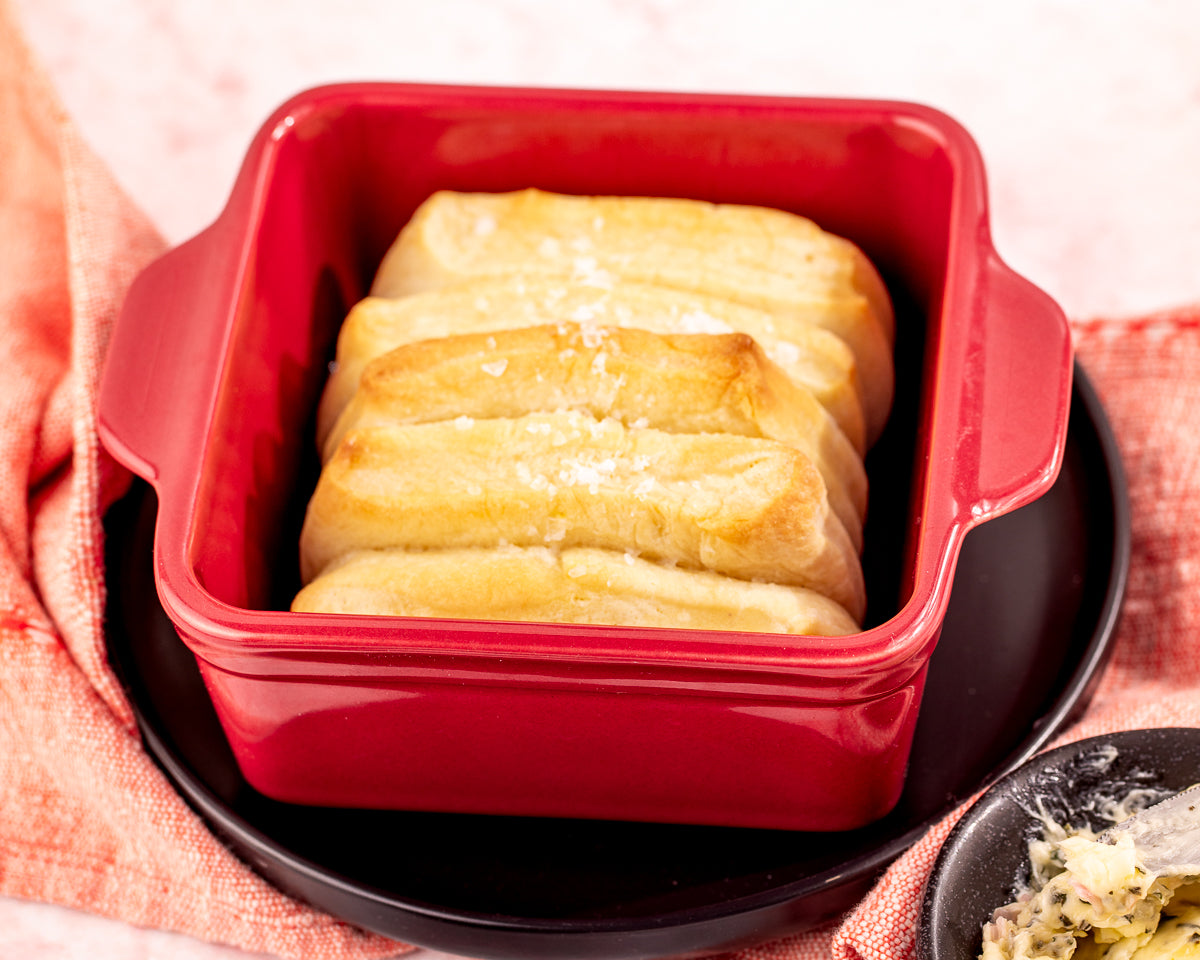
Table of Contents
Jump to the recipe
Introduction
These make-ahead honey butter Parker House Rolls you can finish weeks in advance and bake fresh while the turkey rests. The dough is enriched with milk, honey, butter, eggs, and egg yolk, so every pull-apart layer bakes up soft, pillowy, and tender. This dinner roll not only exceeds expectations in the flavor department, but is also finished with glossy butter and coarse sea salt. This dough is an approachable yeasted dough that needs a stand mixer, instant read thermometer, and a little patience during it's double rise. Serve them warm from the basket alongside soup or stew, or next to a holiday roast or split and toast for leftover turkey sliders the next day.
What are Parker House Rolls?
Parker House rolls are soft, enriched dinner rolls named for Boston’s Parker House hotel. They’re made with milk, butter, and eggs and brushed generously with butter. Traditionally, each round of dough is creased and folded over itself. Our version skips the folding. We stack buttered rectangles of dough so they bake into pull-apart dinner rolls with distinct, feathery layers either directly in Souper Cubes 2-cup trays or Souper Cubes 5-inch Square Baking Dishes. They’re easy to shape, and the stacks fit neatly into freezer-tray wells.
Why You'll Love This Parker House Rolls
Pillowy, Pull-Apart Layers
These easily shareable pull-apart rolls, or mini loaves, are tender because the dough is rolled into strips, brushed with butter, and stacked before shaping. This creates soft, pillowy layers instead of a dense crumb. Also, the addition of the extra yolk helps keep the rolls tender.
Shape Once, Bake Anytime
Get rolls on demand anytime you want or make-ahead to get a jump on your holiday baking. Mix and shape once, then bake as you need.
Sweet & Buttery
Honey gives a subtle sweetness to the dough and butter gives a richness to the dough. Both help them brown beautifully. The flakey sea salt on top helps balance out the richness and and sweetness.
Key Ingredients & Substitutions
Instant Yeast vs. Active Dry Yeast?
Instant yeast is milled finer and contains more live cells of yeast per gram, therefore it needs less time to get going and produces a more consistent rise. The best part about instant yeast is you can add it right to your dough since it activates once it hits the liquid vs. active dry yeast which needs an extra step to hydrate the yeast in a warm liquid and bloom before adding to the rest of the mix. If all you have is active dry yeast, just add in 1:1 ratio, a step to activate by adding it to the warm liquid at 110°F, until foaming, about 5 minutes. It also may take a bit longer about 15 minutes additional during the first rise.
Why Add Butter Both In the Dough and On Top?
Half a cup of butter goes into the dough and save the rest for brushing on top of the rolls, hot out of the oven. This ingredient is the star in this recipe because it gives the classic parker house roll look and flavor. Since this is the case, we suggest that you don't try and substitute this ingredient. Butter in the dough tenderizes the crumb from the inside by cutting the gluten strands to make them shorter. But if you do decide to swap, we suggest a 1:1 ratio of a plant-based butter.
Why Should I Use All-Purpose Flour vs. Bread Flour?
All-purpose flour has less protein (between 9-12%) then bread flour (12-14% depending on brand). Since the protein content is lower in all-purpose flour vs. bread flour this is the best choice to produce tender dinner rolls. If you prefer a taller rise, slight chew and sturdier structure then bread flour could work.
How To Make Parker House Rolls
Prep your ingredients
Gather ingredients to prepare for making the recipe.
Warm Milk & Melt Butter
Warm the milk, honey and sugar together in a small saucepan, until the butter melts and edges begin to bubble, about 5 minutes. Pour into the bowl you will use to mix. Let cool down, stirring occasionally, to 110°F to ensure you don't kill the yeast and it activates properly.