Ultimate Guide to Cleaning Silicone In Your Kitchen
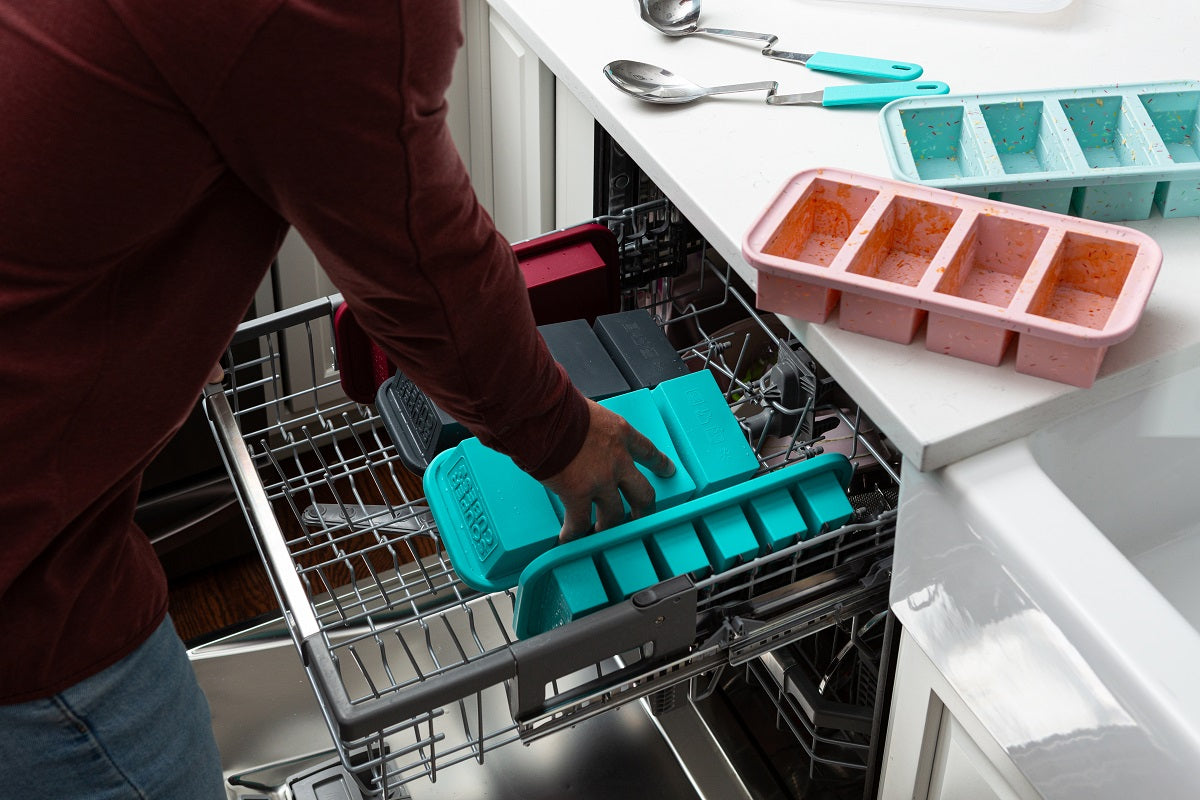
Table of Contents
Our kitchen tools work just as hard as we do when it comes to cooking. Knives get dull from slicing, dicing, and mincing. Once shiny baking sheets turn greasy and brown from round after round of roasted vegetables and your family’s favorite chocolate chip cookies. And those silicone spatulas, muffin tins, and Souper Cubes trays that you rely on for prepping — and freezing — meals? They get coated in oil and sauce that starts to leave sticky residue, stains, and smells.
Just like knives need sharpening and baking sheets require some elbow grease, cleaning and maintaining your silicone cooking tools call for equal parts know-how and technique. When you’re constantly using your silicone mats and molds, it’s normal that you’ll have to move beyond regular scrubbing to get them back to tip-top shape.
What Is Silicone?
There are a handful of materials that are truly indispensable in the kitchen and one of them is food-safe silicone. Silicone is a man-made material that’s flexible, yet durable. It’s commonly used to make tools that are best when nonstick — for example, baking mats, cooking utensils, and ice cube trays. Because it’s also freezer and heat-safe, silicone is the ideal material for Souper Cubes freezing trays, since it allows you to safely chill, store, and reheat your food.
Over time, silicone can start to absorb grease and oils from those foods, especially when exposed to heat, which causes the silicone molecules to expand. Once that happens, running your silicone tools through the dishwasher as usual may not be enough to remove the buildup. But there’s no need to toss or replace them — they just need a more thorough cleaning.
How To Clean Silicone
One of the best features of silicone is that it doesn’t require daily special care. Unlike materials such as cast iron and wood, it can go straight into the dishwasher. We recommend washing your Souper Cubes trays after every use to make sure they’re as clean as possible. When buildup starts to happen, however, there are a few extra steps you can take to restore them.
For General Everyday Cleaning
A strong degreasing dish soap is usually all you need for regular cleaning and maintenance of your silicone kitchen products. You can hand wash your Souper Cube trays and lids, but we generally recommend dishwashing.
Tools Needed:
Dishwasher
Unscented dish detergent
Instructions:
Place your silicone trays in the dishwasher. Run on a normal cycle as you would for day-to-day dishwashing (Yes, it’s that simple!). The silicone trays can be placed in the bottom and top of the dishwasher.
For trays that were frozen or baked with heavily scented or staining foods such as tomatoes, onion, ginger, seafood, and turmeric, use a heavy or pots/pans cycle.
If you don’t have access to a dishwasher and your silicone items require deeper cleaning, soaking them should do the trick.
Tools Needed:
Degreasing dish soap
Nonabrasive sponge
Optional: Lemon juice
Instructions:
Add a teaspoon of dish soap to your sink (with the stopper plugged in) or a heat-proof container large enough to fit your silicone tools.
Fill the sink or container with very hot water. You can optionally add some lemon juice to help cut through the grease.
Place the silicone into the water and allow them to soak for a minimum of 1 hour.
Add 1 to 2 drops of dish soap to a nonabrasive sponge and use it to scrub the silicone.
Rinse with hot water and let it fully dry before using.
For Removing Stickiness
One of the top issues that home cooks experience with silicone is stickiness, especially if you bake with it. That’s because oil and grease can get baked into the surface, leaving a tacky film that regular washing isn’t always powerful enough to remove. If that’s the case, boiling the silicone molds in hot water or placing them in a heated oven will usually do the trick.
Heating in the Oven
Tools Needed:
Degreasing dish soap
Nonabrasive sponge
Baking sheet (optional)
Instructions:
Preheat your oven to 300°F.
Rinse the silicone in hot water and clean it with dish soap and a nonabrasive sponge to remove any remaining oils.